Building a Strong Foundation for Dental Implants
Bone grafting is a common and highly successful oral surgery procedure used to rebuild or augment the jawbone. When a tooth is lost or extracted, the surrounding bone begins to deteriorate — sometimes losing up to 25% of its volume within the first year. A bone graft restores this lost structure, creating a solid and stable foundation for dental implants and preserving your natural facial contour.
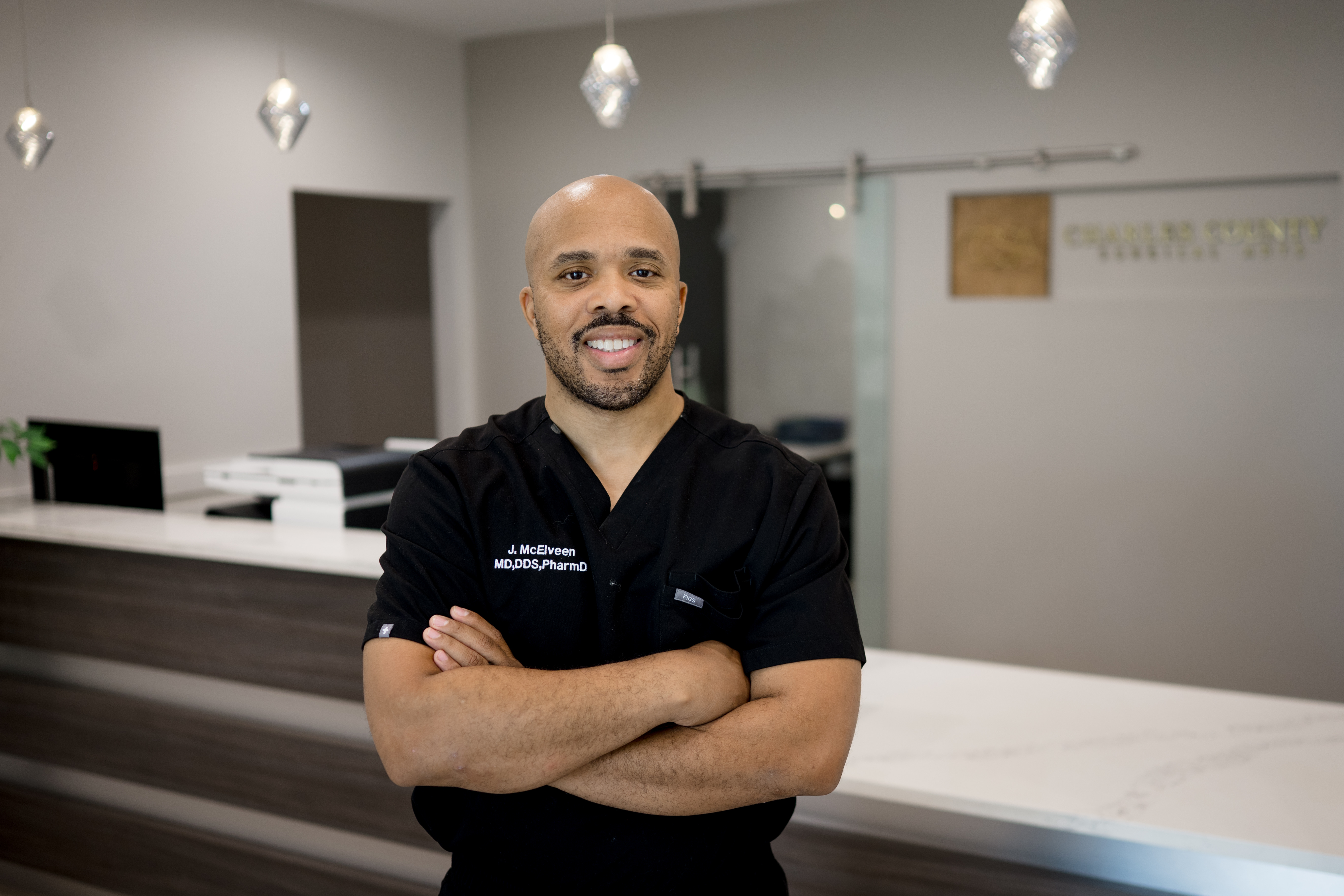
At California Oral and Implant Surgery in California, MD, Dr. John McElveen uses advanced grafting techniques and biocompatible materials to rebuild jawbone safely and effectively. We serve patients from Lexington Park, Leonardtown, Great Mills, Hollywood, Prince Frederick, and across Southern Maryland who are preparing for implants or recovering from tooth loss.
Why Does Jawbone Loss Happen?
Jawbone needs constant stimulation from tooth roots to maintain its density and volume. When a tooth is removed, that stimulation stops. The body reabsorbs the unused bone tissue over time — a process called resorption. Other causes of jawbone loss include:
- Tooth extraction without socket preservation — bone resorption begins almost immediately
- Periodontal (gum) disease — chronic infection destroys the bone supporting teeth
- Long-term denture use — dentures rest on top of the gums without stimulating the bone, accelerating bone loss
- Trauma or injury — fractures or injuries to the jaw can result in bone defects
- Tumors or cysts — may require surgical removal of affected bone
Types of Bone Grafting Procedures
Socket Preservation (Ridge Preservation)
Performed immediately after a tooth extraction, socket preservation fills the empty socket with grafting material to prevent bone collapse. This is the most proactive step you can take — it preserves the jawbone contour and significantly simplifies future implant placement. If you know you will want an implant later, socket preservation is strongly recommended at the time of extraction.
Sinus Lift (Sinus Augmentation)
When replacing upper back teeth (premolars or molars), the sinus cavity may sit too close to the jawbone for safe implant placement. A sinus lift raises the sinus membrane and packs grafting material beneath it, creating sufficient bone height for a dental implant. This procedure is routine at our practice and is often performed at the same time as implant placement.
Ridge Augmentation
When bone loss has already occurred — either from long-term tooth loss, denture wear, or periodontal disease — ridge augmentation rebuilds the jaw's natural contour. Grafting material is placed along the deficient ridge and covered with a protective membrane. Over several months, your body converts the graft into strong, natural bone.
Block Bone Graft
For patients with significant bone deficiency, a block of bone may be harvested from another area of the jaw (such as the chin or back of the jaw) and secured to the deficient site with small titanium screws. This is typically reserved for cases where large amounts of bone regeneration are needed.
Types of Bone Graft Materials
Dr. McElveen selects the appropriate grafting material based on the size and location of the bone defect, and the patient's overall treatment plan:
- Autograft (Your Own Bone): Bone harvested from another site in your own body — typically the chin, back of the jaw, or hip. Considered the "gold standard" because it contains your own living cells and growth factors.
- Allograft (Donor Bone): Processed human bone from a certified tissue bank. Thoroughly sterilized and tested — eliminates the need for a second surgical site. This is the most commonly used graft material.
- Xenograft (Animal-Derived): Bone mineral typically derived from bovine (cow) bone. Acts as an excellent scaffold for your body's own bone to grow into.
- Synthetic (Alloplast): Lab-created biocompatible materials such as calcium phosphate or hydroxyapatite. A good option for patients who prefer not to use human or animal-derived materials.
The Bone Grafting Procedure
Bone grafting is typically performed under local anesthesia or IV sedation. The procedure involves:
- Step 1: The gum tissue is gently opened to expose the bone-deficient area.
- Step 2: The selected grafting material is placed into the defect and shaped to match the desired contour.
- Step 3: A biocompatible membrane is often placed over the graft to protect it and guide bone regeneration.
- Step 4: The gum tissue is closed with sutures.
For socket preservation grafts performed at the time of extraction, the process is simpler — the graft is placed directly into the extraction socket and covered with a collagen plug or membrane.
Healing Timeline
Bone grafting requires patience. The graft material serves as a scaffold — over the following months, your body's natural bone cells gradually replace the graft with strong, living bone. Typical healing timelines include:
- Socket Preservation: 3–4 months before implant placement
- Sinus Lift: 4–6 months of healing time
- Ridge Augmentation: 4–9 months depending on the extent of grafting
- Block Graft: 4–6 months before the site is ready for implant placement
During healing, we monitor your progress with periodic radiographs to confirm bone integration is on track.
Recovery After Bone Grafting
Most patients experience mild to moderate swelling and discomfort for 3–5 days after a bone grafting procedure. You will be prescribed pain medication and antibiotics to manage comfort and prevent infection. Key recovery guidelines:
- Apply ice packs to the cheek for the first 48 hours to control swelling
- Eat soft foods and avoid chewing directly on the graft site
- Do not smoke or use tobacco — smoking significantly impairs bone healing
- Avoid strenuous activity for 3–5 days
- Small granules of graft material leaking from the site are normal and not a cause for concern
Bone Grafting and Dental Implants
Bone grafting is often the critical first step that makes dental implants possible. At California Oral and Implant Surgery, Dr. McElveen places over 600 dental implants annually with a 90–95% success rate — and many of those cases involve preliminary bone grafting. Whether you need a simple socket graft or a more complex ridge augmentation, we manage the entire process from grafting through implant placement in our California, MD office.
California Oral and Implant Surgery serves patients from Lexington Park, Leonardtown, Great Mills, Hollywood, Mechanicsville, Solomons, Prince Frederick, La Plata, Waldorf, and across Southern Maryland. If your dentist has recommended a bone graft, or if you're exploring dental implants as a next step, request a consultation or call us at (301) 685-5688.